Blessed to have had the privilege of performing my first Umrah with my family before the year ended. We chose TravelConnect as the agency to bring us on this spiritual journey. The first leg of the journey was Al-Madinah Al-Munawwarah, the second-holiest city in Islam.
The city is beautiful, and the weather was splendid. There was barely a time when I felt the need to wash up or change clothes. The streets were lively, filled with both locals and pilgrims who were always on the move.

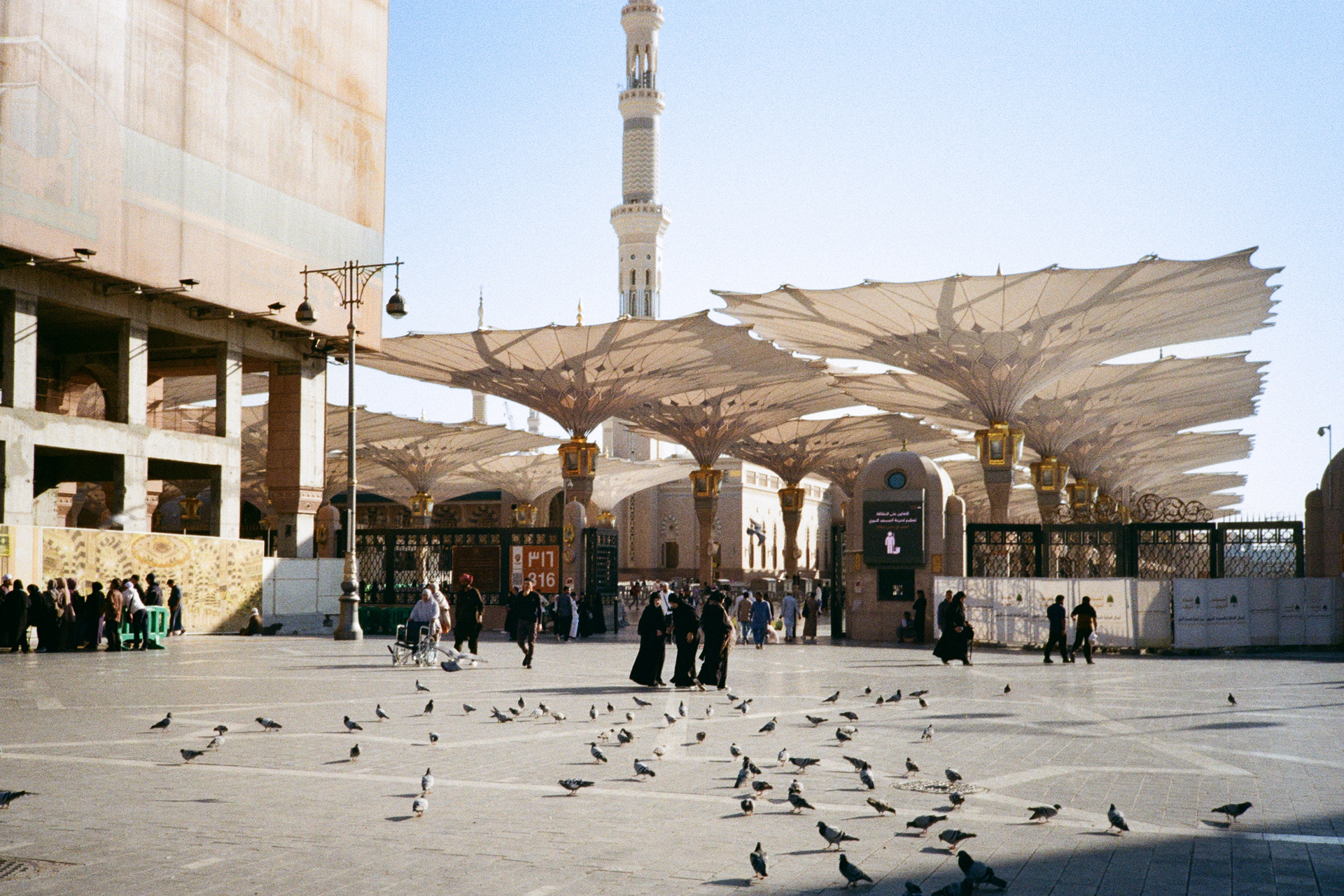
The Majestic Medina Haram Piazza Shading Umbrellas
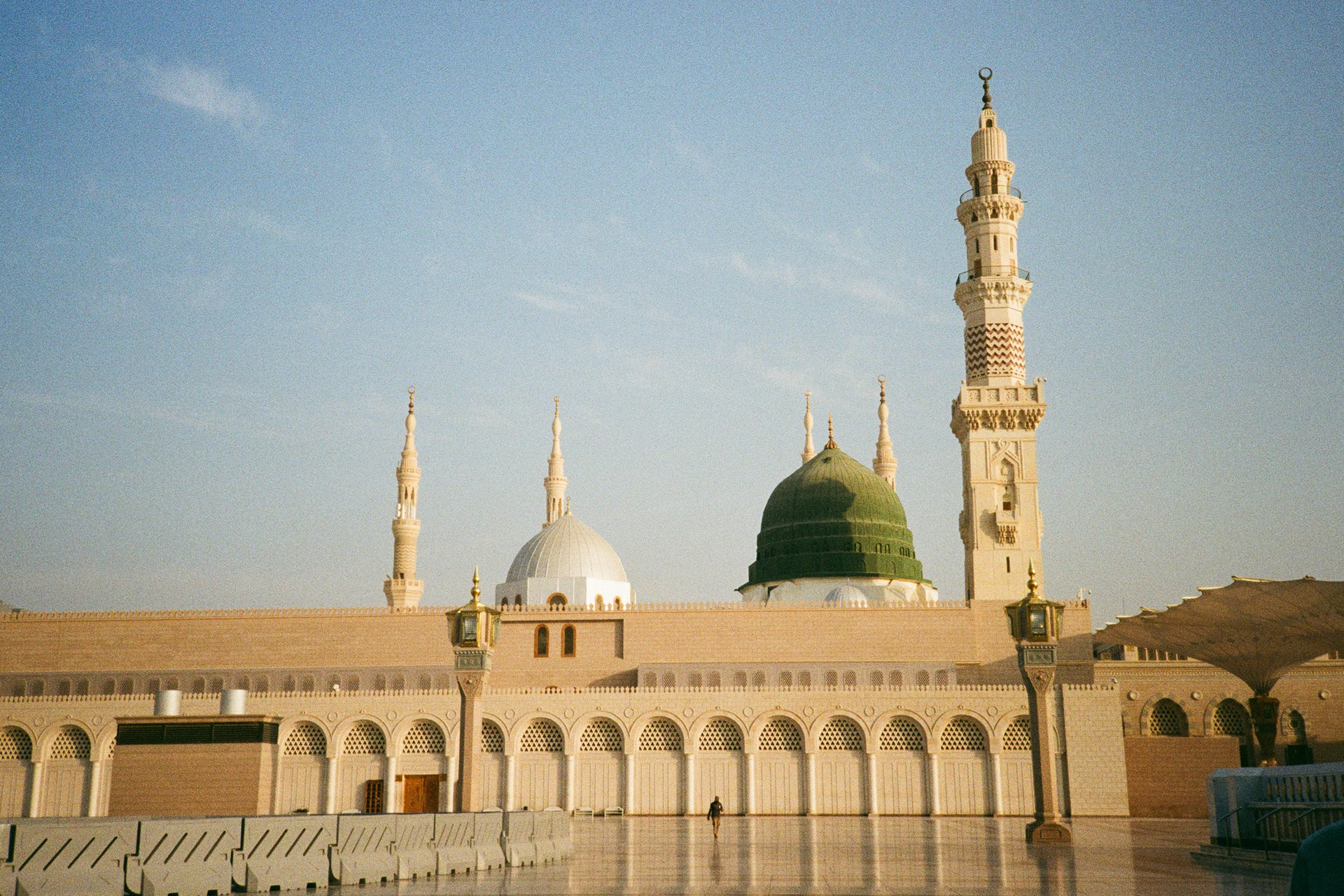
Madinah is home to Al-Masjid an-Nabawi, the mosque built by Prophet Muhammad (PBUH), where he is buried alongside two of his faithful companions, Umar ibn al-Khattab (RA) and Uthman ibn Affan (RA). Alhamdulillah, we were grateful to be able to enter the Rawdah, perform salah, and make du’a. We managed to take our time and did not encounter any unpleasant interactions with the guards. The feeling of being in such close proximity to the Prophet and his companions was truly surreal.

The green-coloured dome over the tomb of the Prophet Muhammad (PBUH), Umar ibn al-Khattab (RA) and Uthman ibn Affan (RA).
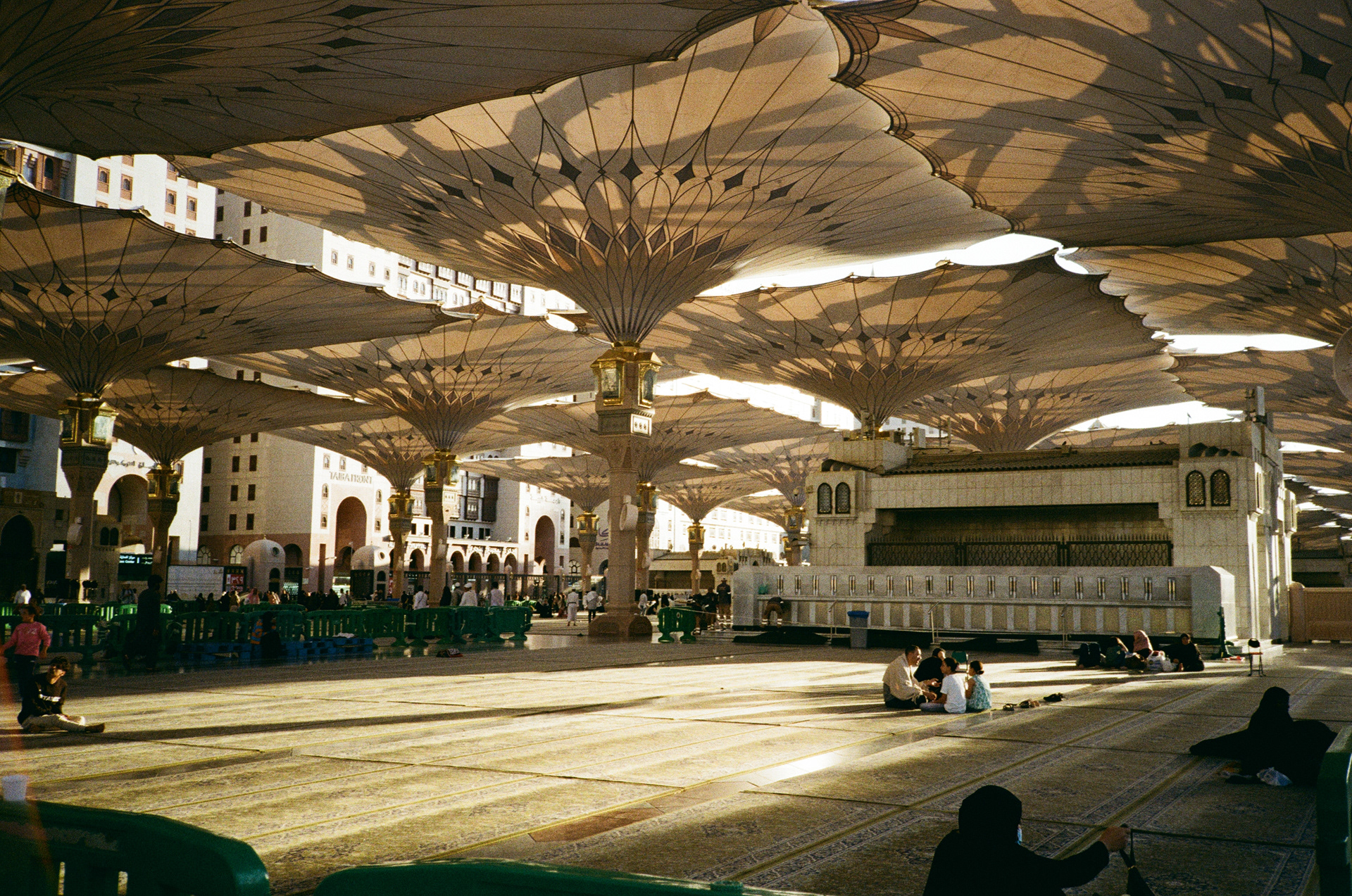
The mosque’s courtyard is vast, with barricaded areas lined with carpets aplenty for people to perform prayers or simply rest throughout the day. These spaces are especially convenient for families with children or those who require special assistance, as it may be challenging for them to make their way inside the main prayer halls. Still, I believe anyone who has made it there would at least step into the mosque once.
The entire complex is kept in pristine condition. Housekeepers are often seen sweeping, operating floor-scrubbing machines, or replacing carpets with fresh ones. Along the perimeter of the courtyard are numbered gates, making entry and exit convenient from any direction.

Serenity.

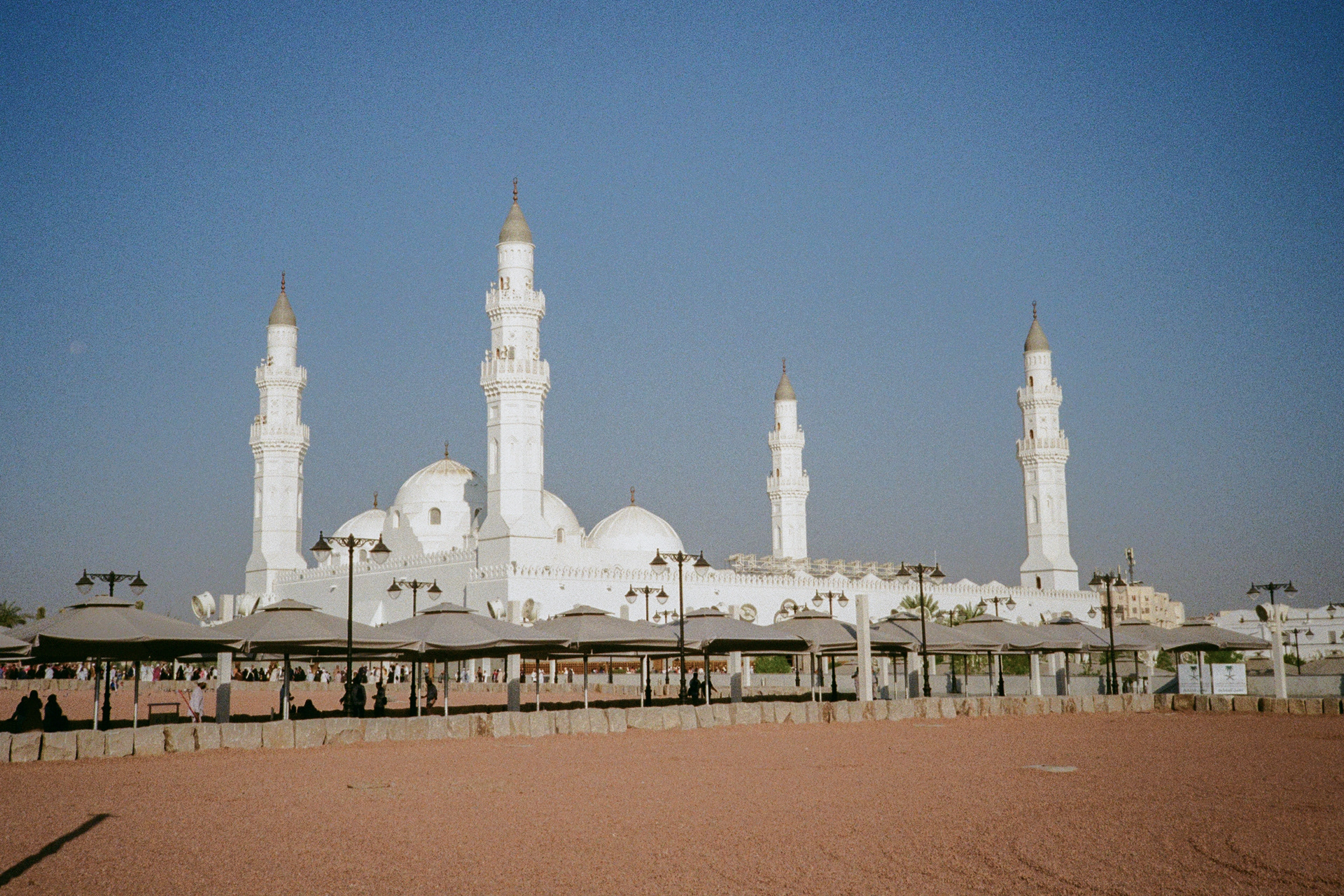
We visited several historical sites while in Madinah, the most prominent being Masjid Quba, the first mosque in the world, built by Prophet Muhammad (PBUH) when he first arrived in Madinah from Makkah.

Masjid Quba.

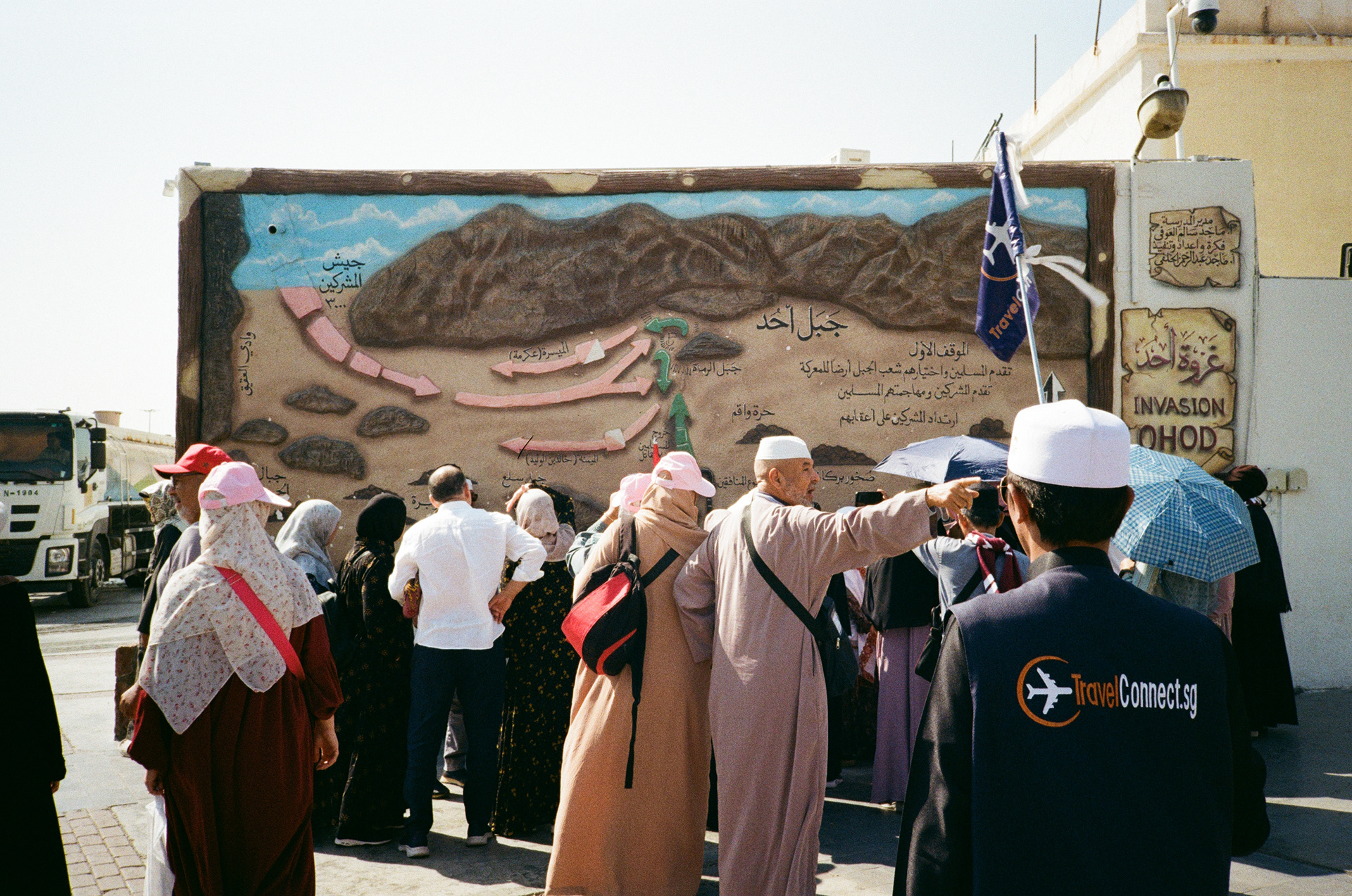
We also visited Jabal Uhud (Mount Uhud), a historically significant mountain north of Madinah where the second major battle in Islamic history, the Battle of Uhud, took place. It was here that the forces of Prophet Muhammad (PBUH) fought against the Meccan polytheists, and where a small group of archers disobeyed the Prophet’s orders, leading to significant Muslim losses, including the martyrdom of the Prophet’s uncle, Hamza ibn Abd al-Muttalib (RA). He was given the title “Leader of Martyrs” and was buried, along with many others, at the foot of the mountain in what is now known as Uhud Martyrs’ Square.

A diagram of the Battle of Uhud on-site.
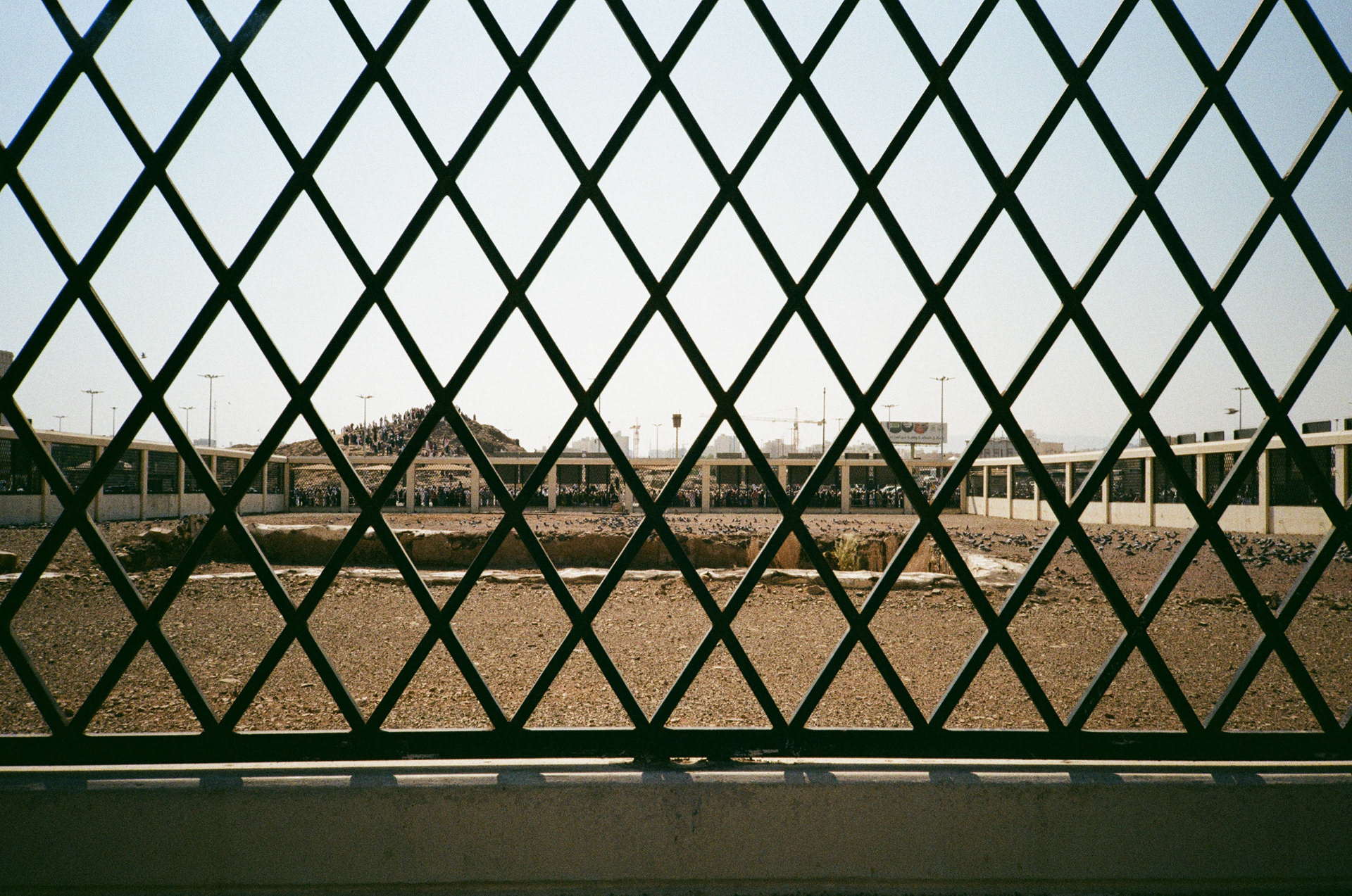
Uhud Martyrs’ Square.
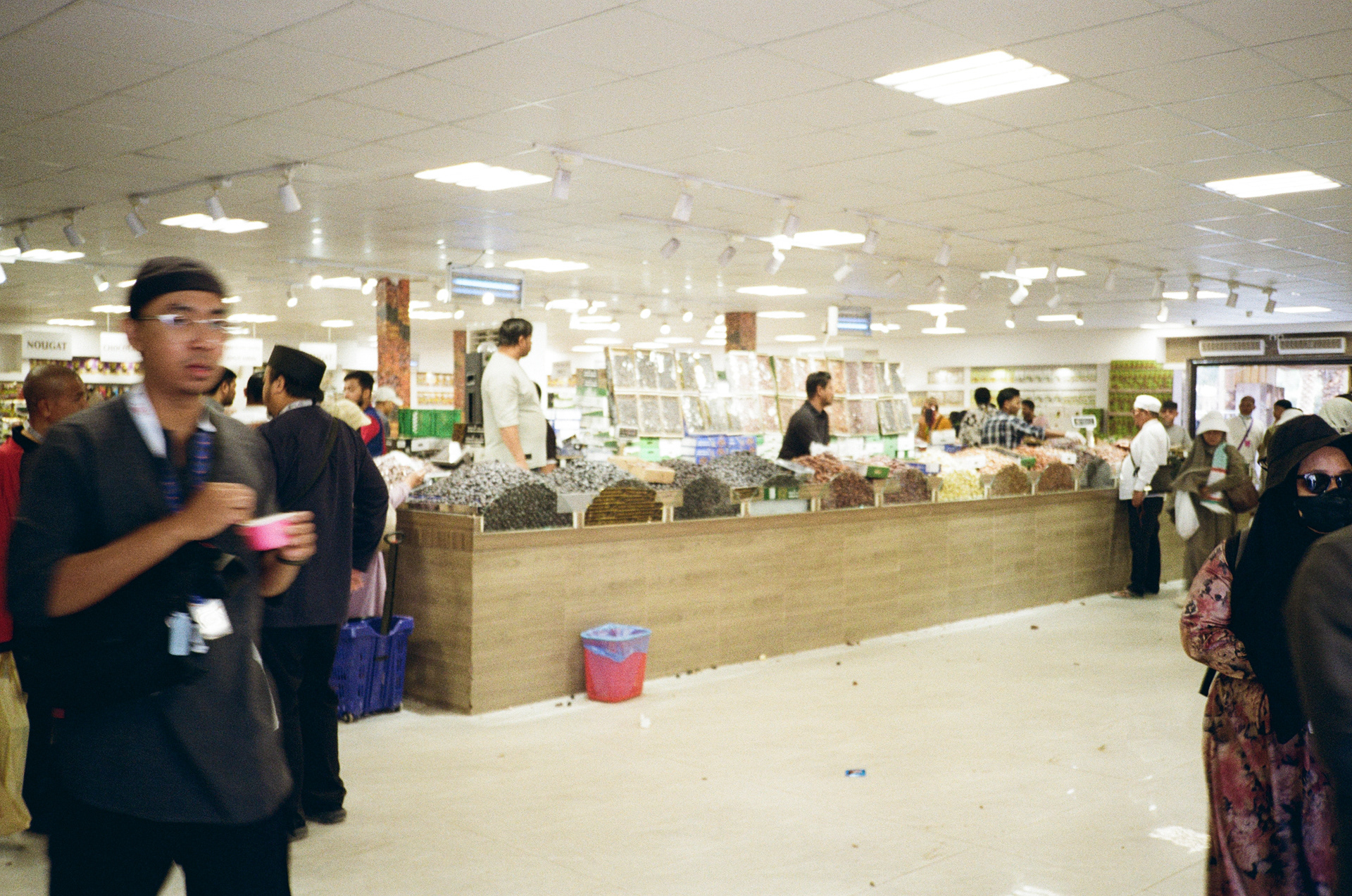
The date farm we visited, however, was not what I had expected. It was underwhelming. There was a large store selling a variety of dates, chocolates, candies, honey, and more, with a small seating area at the back for visitors to rest and enjoy light snacks. I had imagined dining among rows of date trees in a shaded space, much like what I had seen in videos online, but sadly, that wasn’t the case. The area only had a few scattered tables and chairs, and could do with some cleaning. Still, the most disappointing part was the near absence of date trees.

You can sample a lot of the consumables here.
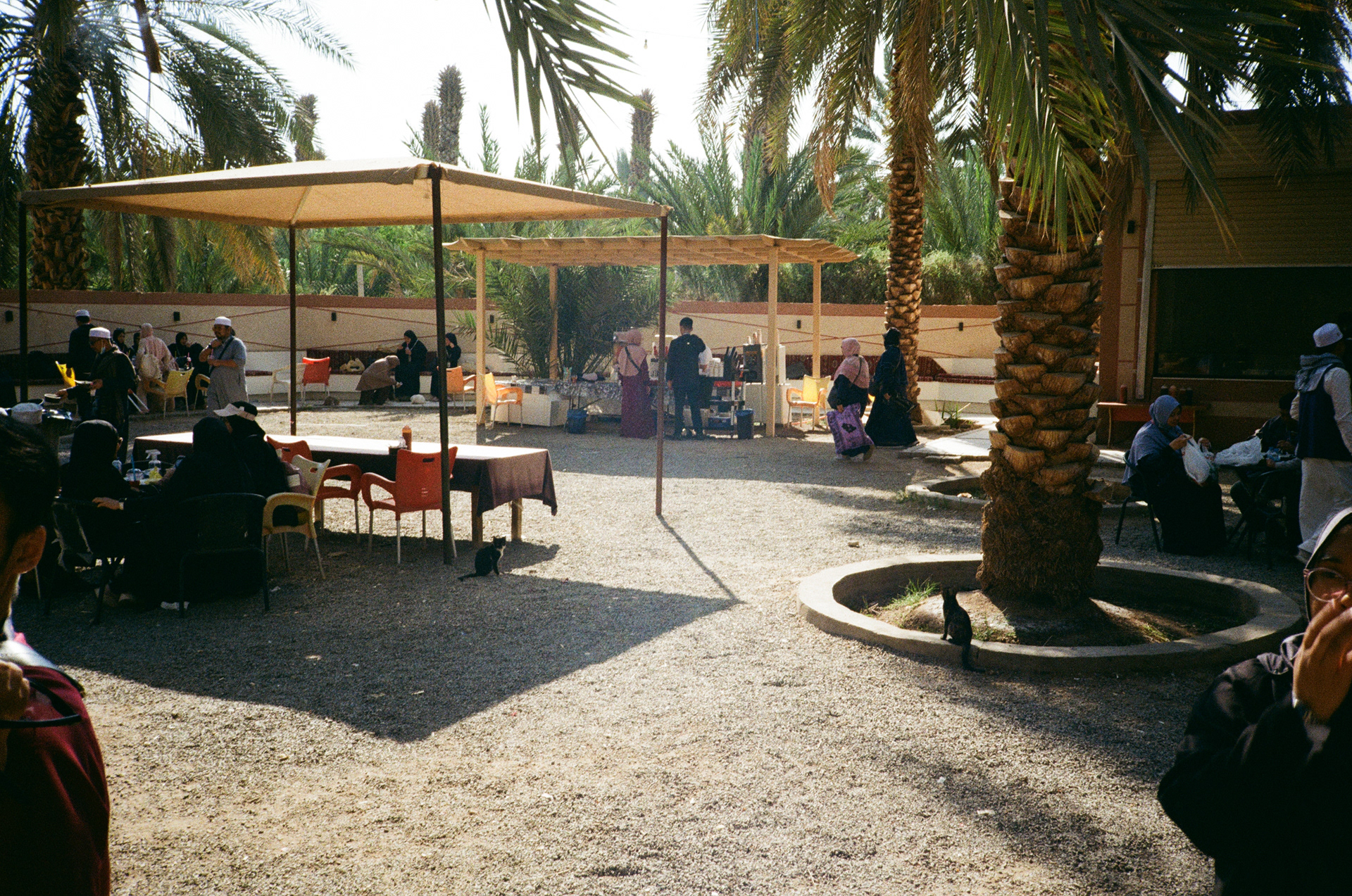
The saving grace here are the kitties.
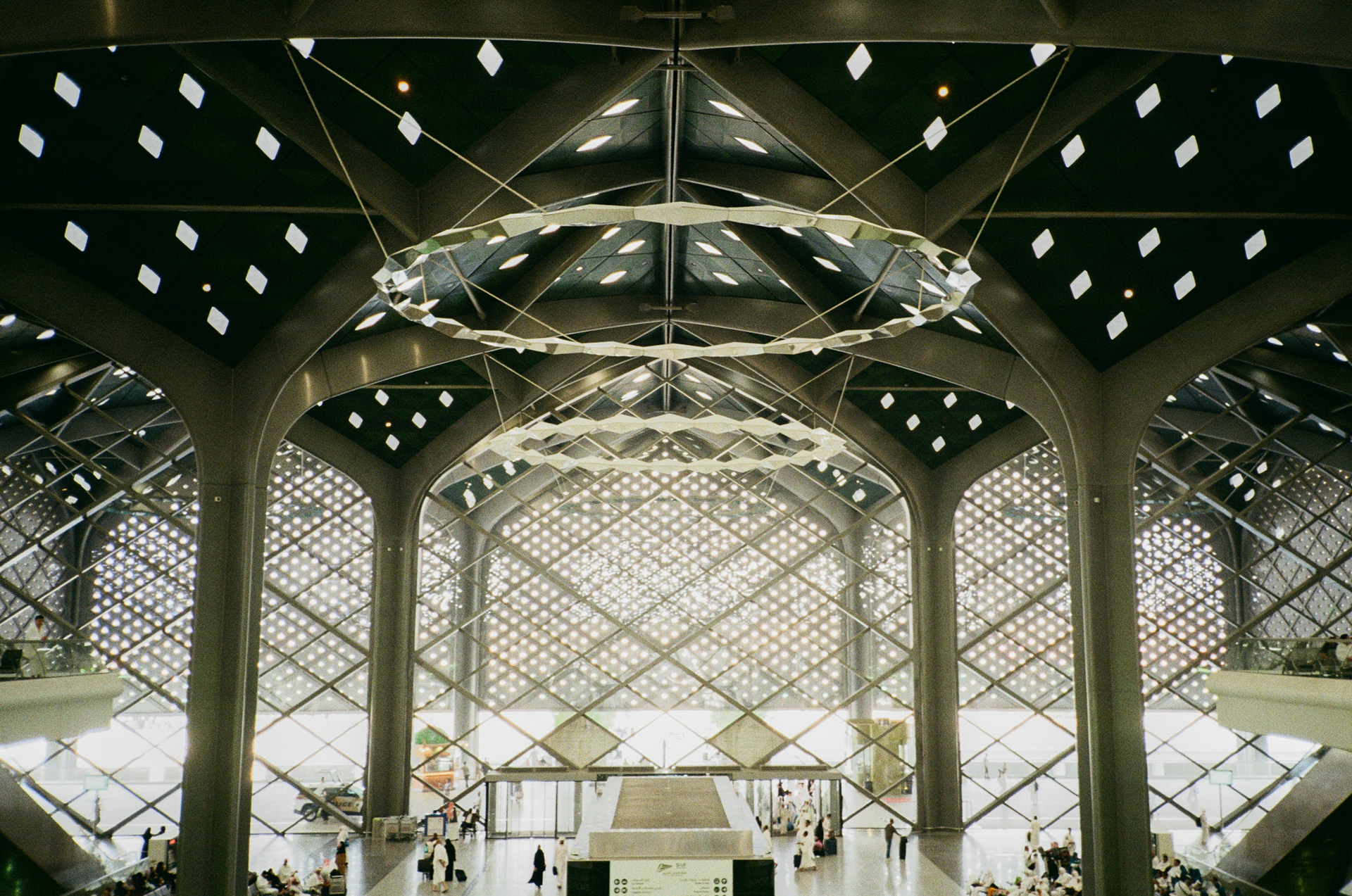
On the fifth day, we began our journey to Makkah. We left the hotel in our ihram, and our bus dropped us off at Madinah Station. From there, we took the Haramain High-Speed Train to Makkah, a 450km journey completed in just 2.5 hours. Shortly after departure, an announcement came over the speaker indicating that it was time for pilgrims to make their niyyah for Umrah. For those travelling from Madinah, the miqat is Dhul Hulaifah (Bir Ali).
Along the way, we recited the Talbiyah while watching the scenery zoom past the windows. The train reached a top speed of 300 km/h, and I kept checking the on-train screen, waiting to capture the moment it hit that mark. And it did, though only for a couple of moments. It reminded me of my Bandung trip two years ago on WHOOSH, although that train never reached its maximum speed.

Inside Madinah Station.

After disembarking, we quickly made our way to the bus heading to our hotel. Strangely, the bus stopped some distance away, and we were told to get off. I was puzzled as to why we didn’t stop closer, but this was later explained.
It was already past Isha’ when we reached our hotel in Makkah. After settling our luggage in the rooms, we immediately headed to Masjid al-Haram to perform our first Umrah. As we made our way down to the Haram, I was stunned by the sheer number of people. It was extremely crowded, a stark contrast to Madinah. Barricades in various areas made the walkways narrower, adding to the congestion.
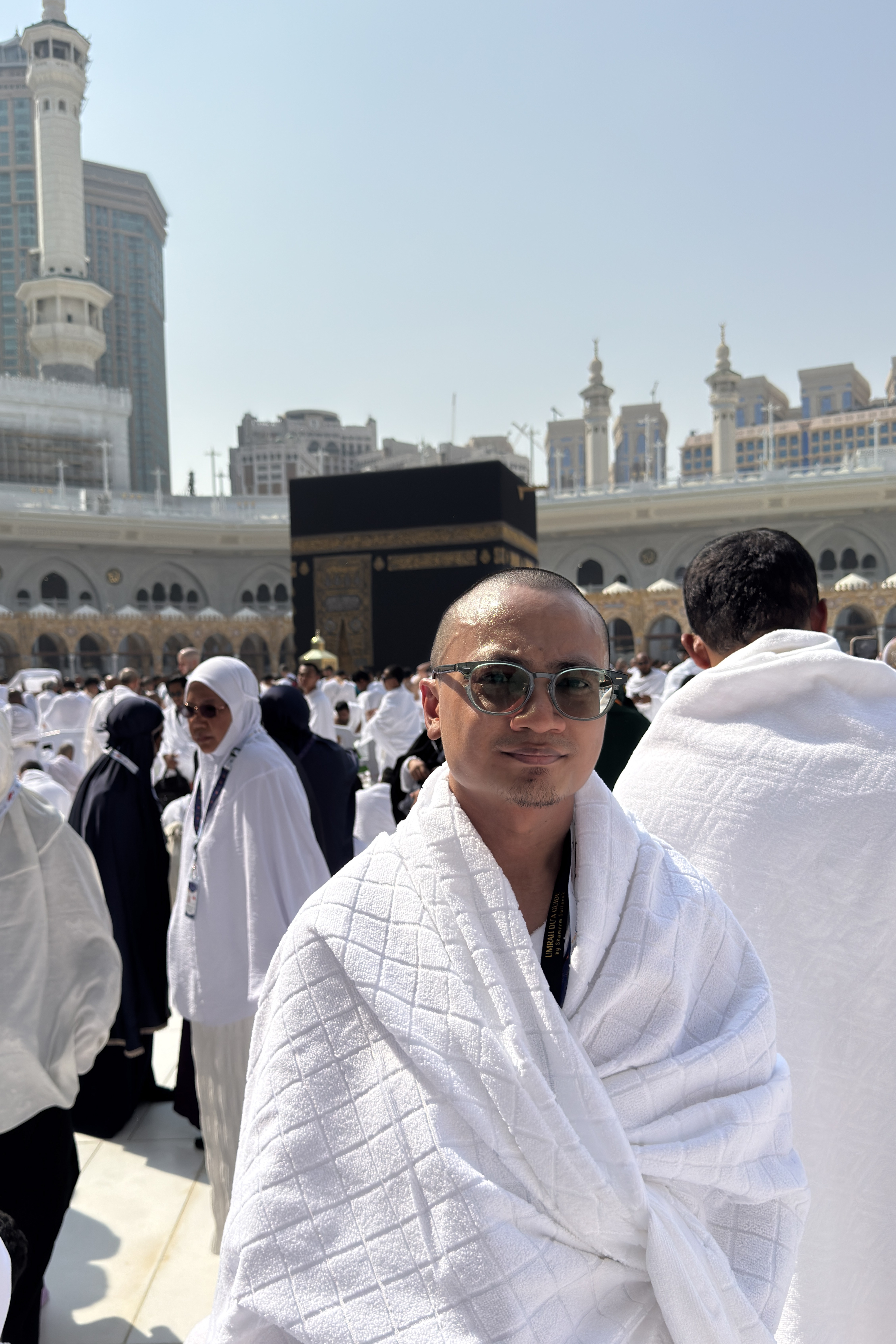
I remember feeling a mix of happiness and nervousness as we approached the Mataf. I was happy that I was finally about to see the Kaaba, yet nervous about performing the Tawaf. Then, when I finally laid eyes on it, Masha’Allah, it was simply indescribable. I felt truly blessed to be given the opportunity.
Before beginning Tawaf, our mutawwif, Ustaz Sonhadji, organised us with the seniors up front and the younger men surrounding the group. This was to keep us together and prevent anyone from getting separated in the crowd. True enough, as we circled closer to the Kaaba mid-Tawaf, pilgrims were pushing inward and outward, and we had to hold our formation. Ustaz, who led the front, was constantly alert, pausing or slowing down when needed to let others pass. The scene was far more chaotic than what we see on TV, and indeed, one must exercise sabr (patience). Alhamdulillah, we completed our Tawaf and Sa’i that night, concluding my first Umrah. It was exhausting, but fulfilling.

Taken on the third Umrah of the tour.
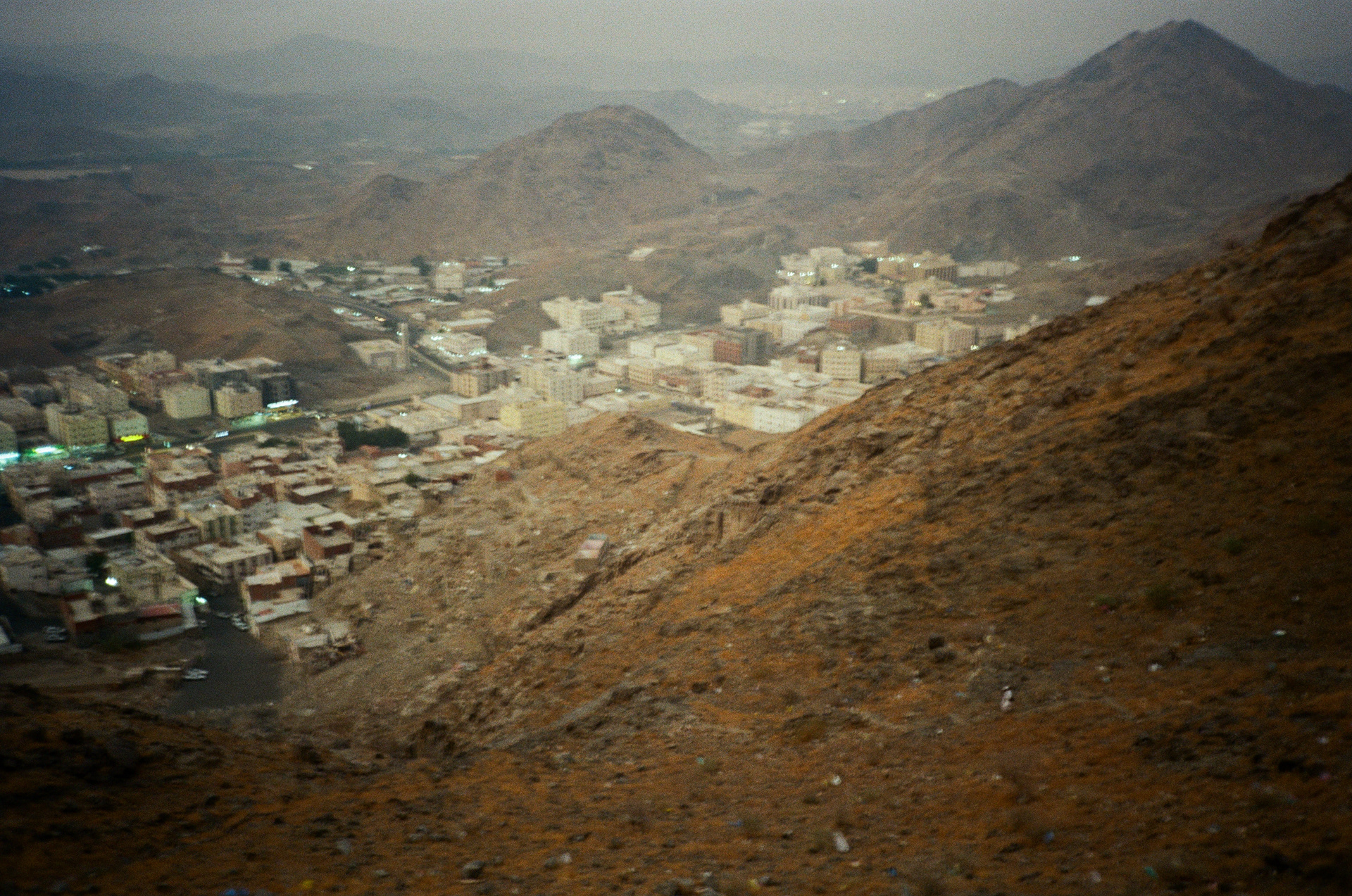
The less-than-pleasant part about commuting in Makkah is that coaches cannot drop passengers near the hotels due to the massive crowds. Guards also occasionally block certain roads, forcing drivers to find alternative drop-off points. While this may sound like a complaint, it’s merely an observation. Each time I saw pilgrims walking hundreds of metres from faraway hotels, I felt grateful that ours was less than a five-minute walk from Haram. As Ustaz Sonhadji once remarked during a commute, “Singaporeans are pampered.” Like it or not, he couldn’t be more right.
Alhamdulillah, my siblings, my brother-in-law, and I also managed to climb Jabal Nur, which stands 642 metres tall. At its peak lies Cave Hira, where Prophet Muhammad (PBUH) received the first revelation of the Holy Qur’an. As my parents had climbed it before, they decided to stay below to care for their grandson.
The hike up is manageable for anyone in generally good health. You just have to pace yourself and stay hydrated. What surprised me was that there were merchants selling goods near the top, even as night fell. Once at the summit, you still need to descend a little further to reach Cave Hira, and that’s where the chaos begins. The narrow path becomes congested quickly. My brother and I decided to try going down, but patience was truly tested. Many people ignored basic courtesy, squeezing through tight spaces without waiting for their turn. There’s even a small “tunnel” where only one person can pass at a time. The headroom is low, and a large boulder narrows the space further, slowing movement to a crawl. If there’s opposing traffic, it’s almost impossible to move. We were lucky on our way in, but not on the way out. My brother got stuck inside for nearly ten minutes because people kept pushing through from the other side. Thankfully, one lady finally paused and let them out, easing the gridlock. It was a nightmare. With the upcoming cable car project that will connect the foot of Jabal Nur to Cave Hira, I can only imagine that the situation might worsen without proper crowd control. It will definitely help the elderly and those unable to climb, but without organisation, it could become chaotic at the top.

Can you see the man making his way down via his own path? My point-and-shoot film camera is struggling here with the low-light scene.
The next day onwards, I came down with a bad sore throat and eventually a cold. Fortunately, I was still able to follow the tour programme and perform my ibadah, though I couldn’t enjoy much of the food.
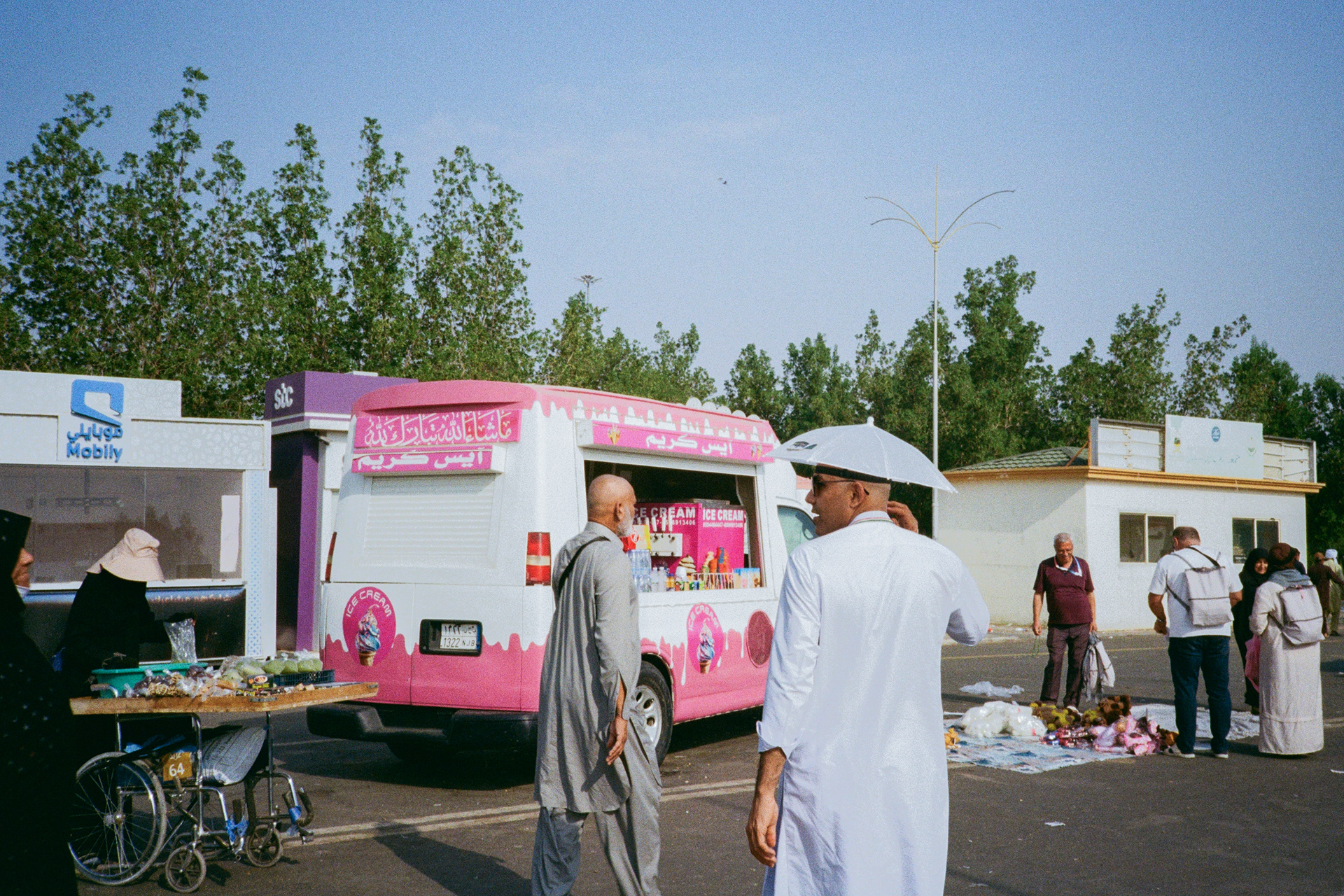
Another historical site we visited in Makkah was Jabal Rahmah in Arafat. It is the place where Prophet Adam (AS) and Eve (AS) reunited on Earth after falling from Heaven, and after their repentance was accepted by Allah SWT. From the bus parking area, we had quite a walk. The road was lined with street vendors, beggars (many of them amputees), and, for some reason, many ice cream vans. Alhamdulillah, Ustaz Naim treated us to refreshments before we began the walk under the hot sun.

A usual sight seen along the stretch of road leading to Jabal Rahmah.
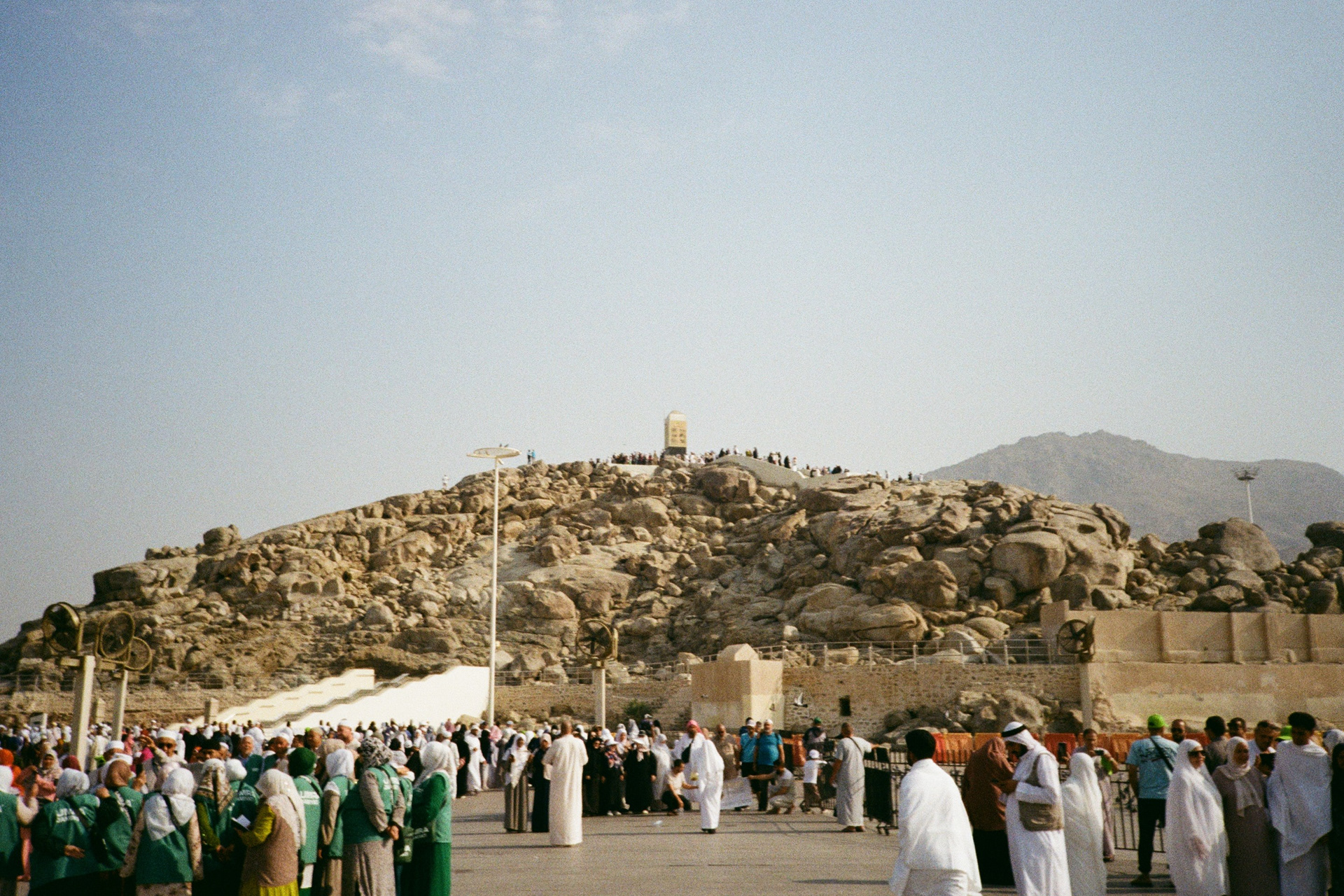
During Hajj season, you will not be able to see most of the mountain.
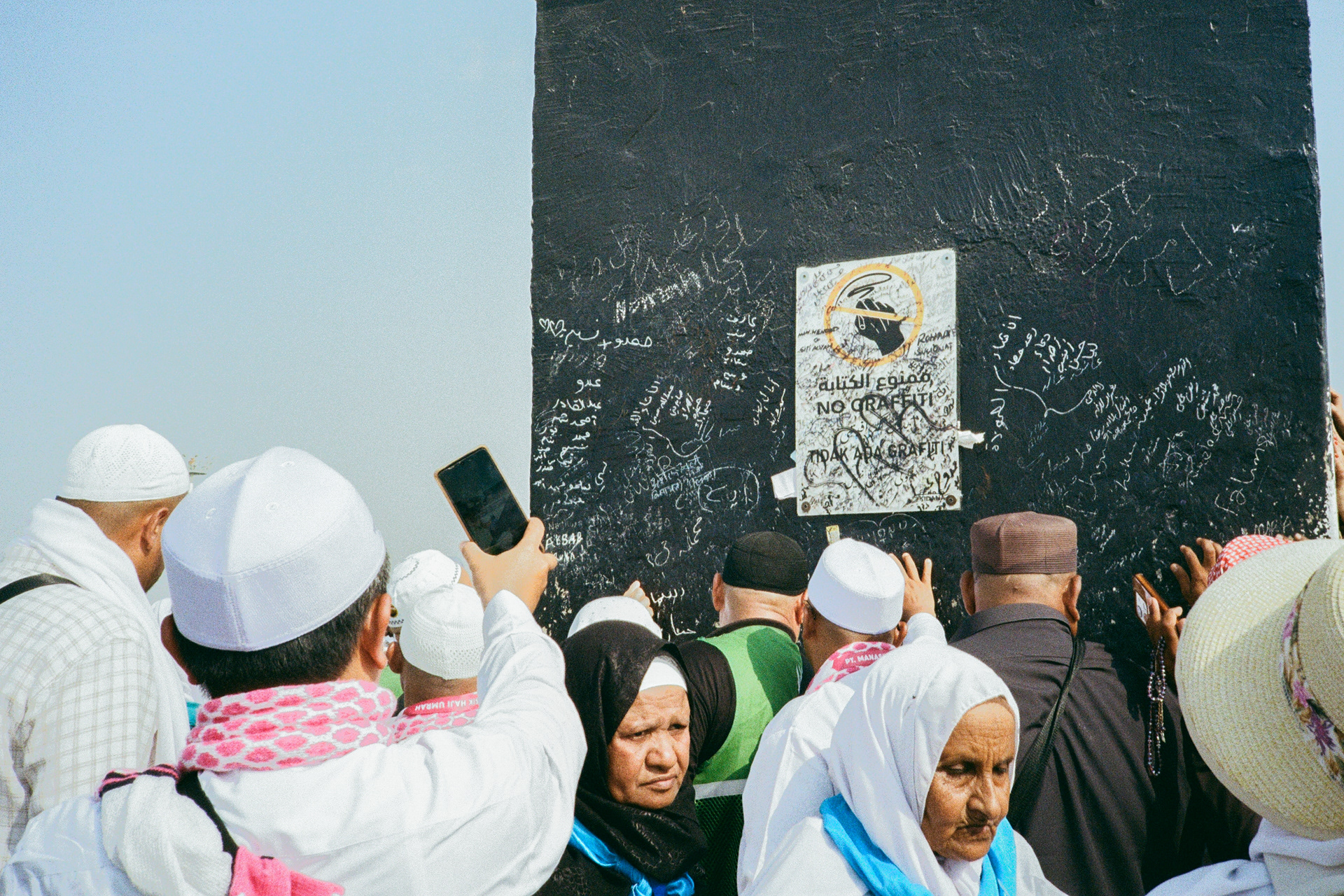
At the foot of Jabal Rahmah, I initially didn’t want to climb due to my condition and the heat. But then it struck me that I had come this far, and this might very well be my last chance, so I decided to go for it. Thankfully, it is just a 15-20 minutes, relaxed climb compared to the one the day before.

Saddening to see all these Khurafat practices.
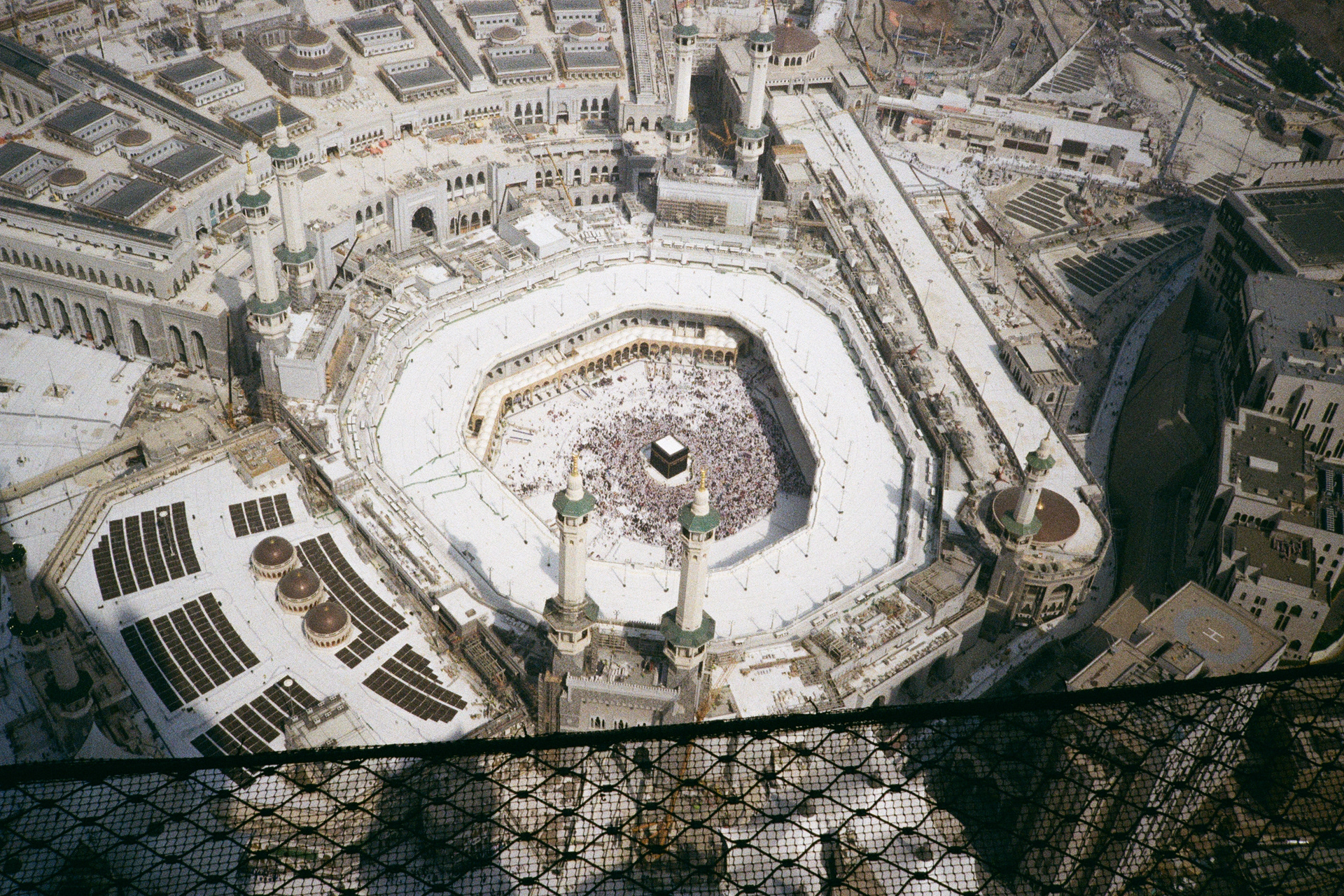
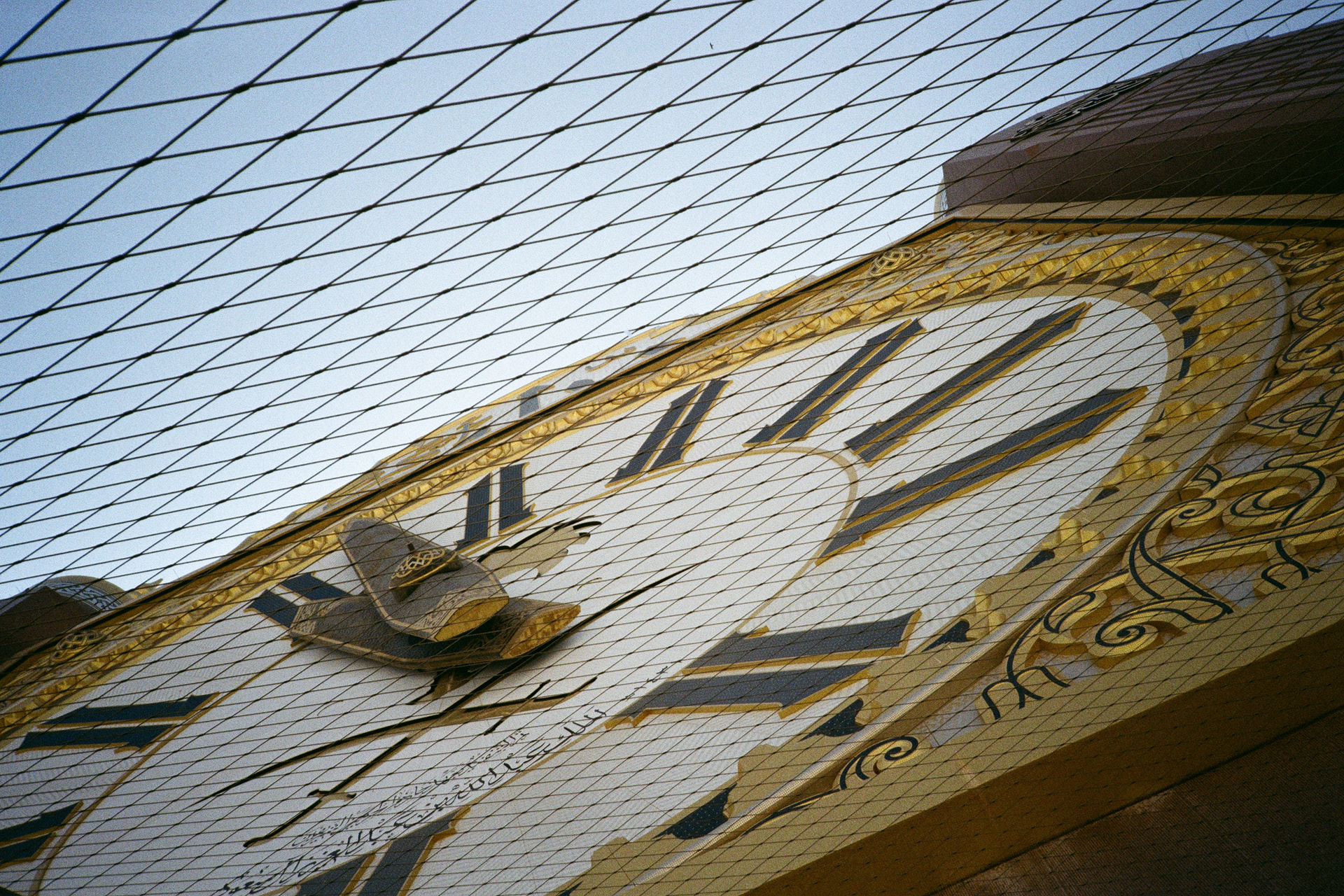
My mum was excited to visit the Makkah Royal Clock Tower, as she hadn’t had the opportunity to go up during her last Umrah. Standing 601 metres tall, it is the tallest clock tower in the world. I’m glad we went. The view was breathtaking. From above, you could see Masjid al-Haram, the Kaaba, and the surrounding mountains. The pilgrims performing Tawaf below looked like moving dots.

Simply breathtaking.

The face glows at night.
We managed to perform three Umrahs during our stay in the holy city, one of which we did using the buggy service. It was midday, and considering our group had many seniors, Ustaz recommended it. On our final day, we performed Tawaf Wada and then departed for Taif. I was still feeling unwell at that point and wished I had recovered enough to fully enjoy the remaining days before returning home.
Taif was wonderful, largely because of its cool climate. It is a popular summer retreat for residents of the Kingdom, located 1,879 metres above sea level on the eastern slopes of the Sarawat Mountains. Known as the “City of Roses,” Taif is famed for its rose fields that bloom in spring. We spent two nights there, though our hotel happened to be in an area filled mostly with electronics shops and, oddly, several selling hospital equipment.

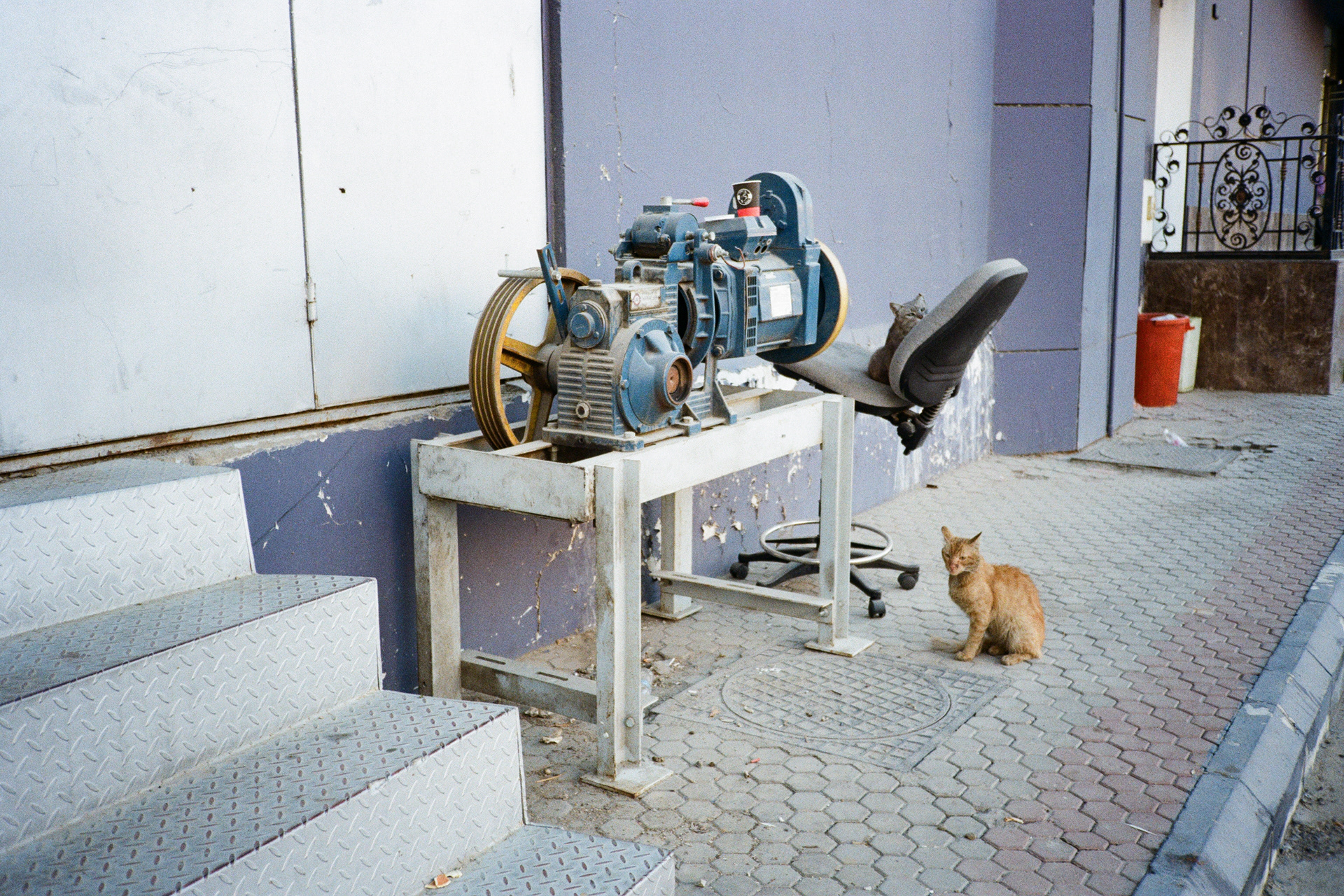
These two kitties are always hanging outside our hotel. One's an introvert, another's an extrovert.
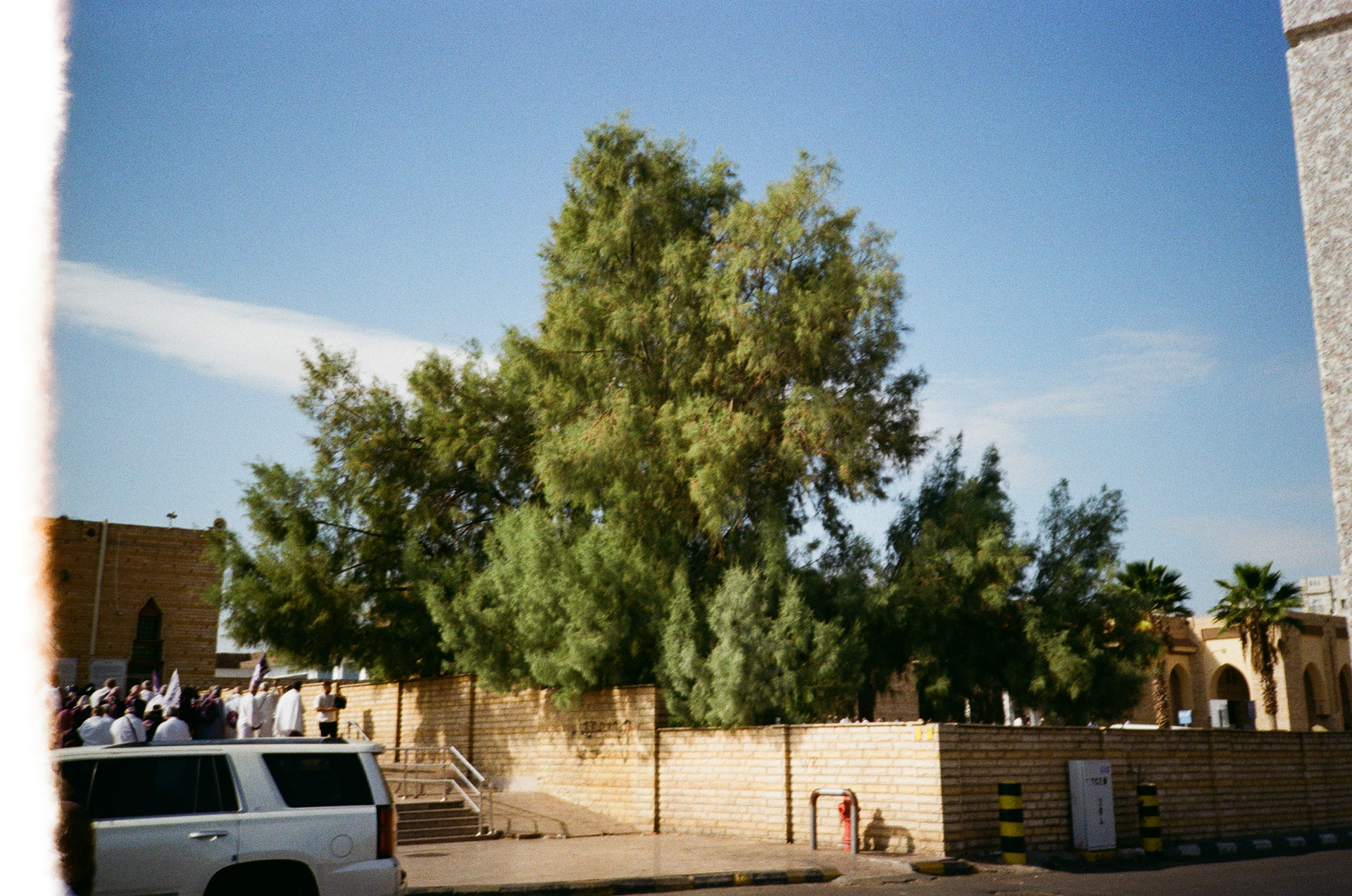
The most significant historical site we visited in Taif was the resting place of Abdullah ibn Abbas (RA), a beloved cousin of the Prophet and a renowned scholar of Islam, even from a young age. It was said that even older companions sought his wisdom and insight. Masha’Allah, how incredible is that? He was buried beside the mosque named in his honour.

The resting ground of Abdullah ibn Abbas (RA).
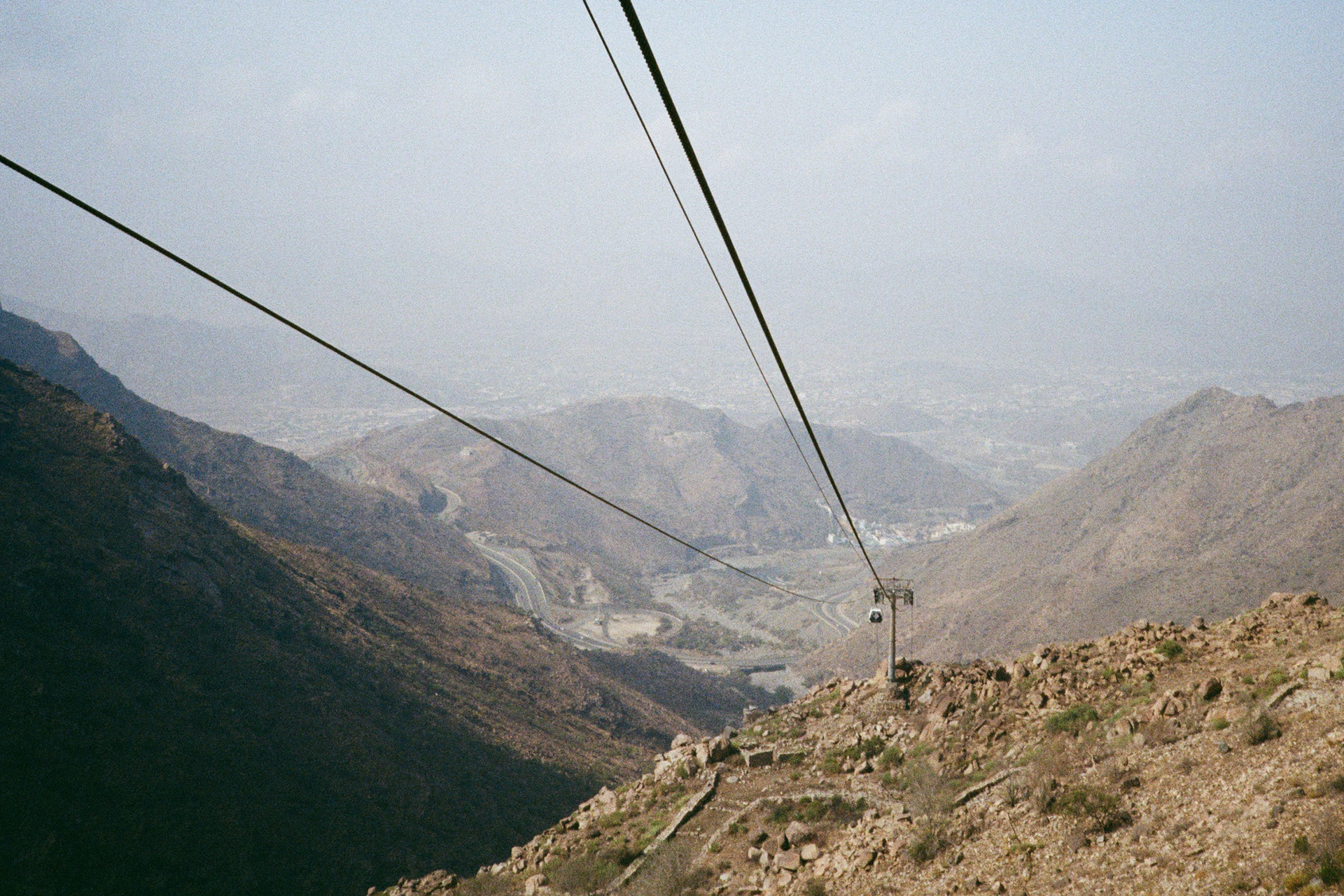
We also rode the Al Hada Cable Car, one of the city’s main attractions. It runs 4.2 kilometres from the upper station near Ramada Al Hada Hotel down to the lower station, which hosts several leisure and entertainment facilities. It was the longest cable car ride I have ever experienced. The mountain views, misty air, and winding roads below made it a truly spectacular journey.

Look at that view!

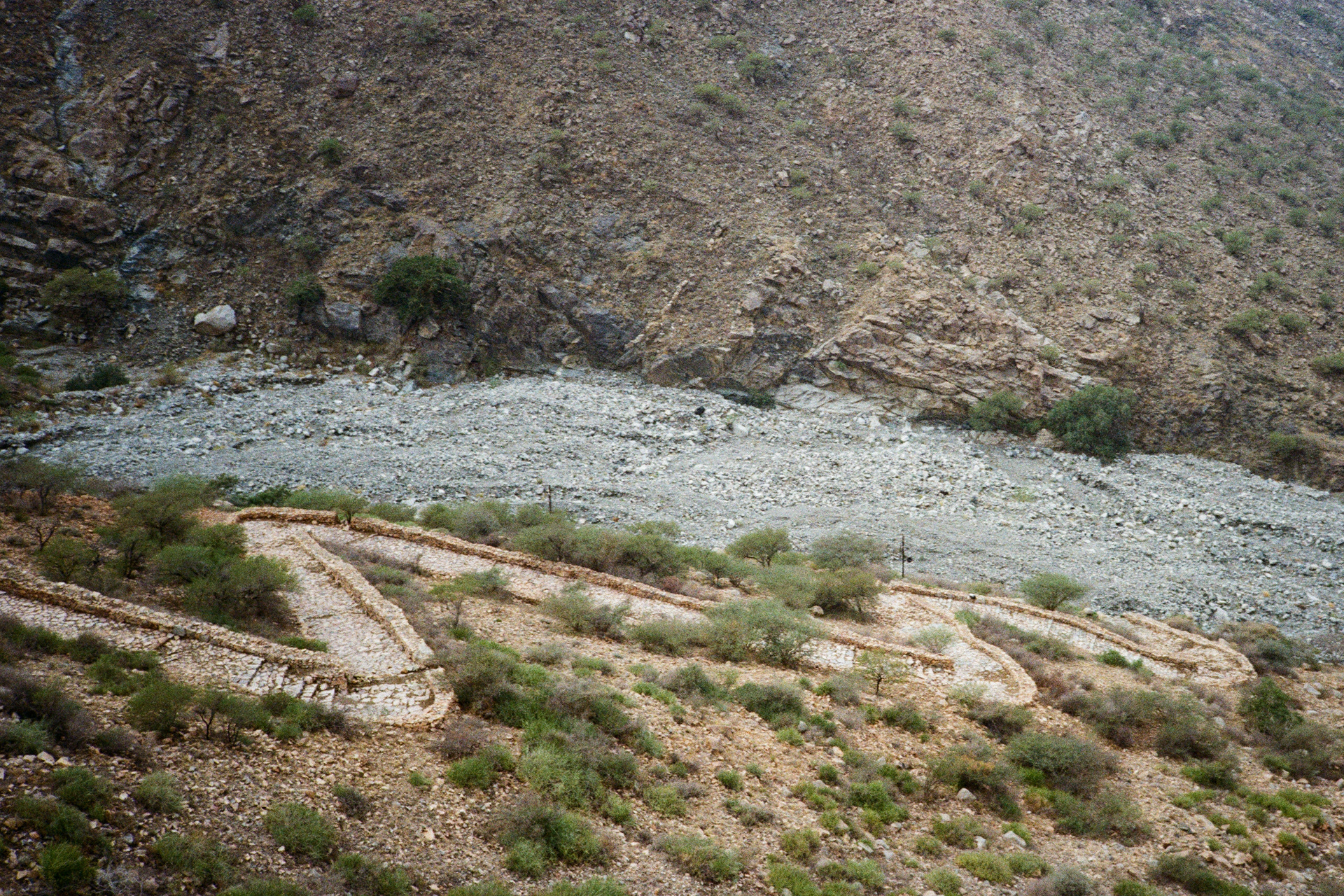
There is hearsay that Prophet Muhammad (PBUH) had walked the stone paths on his way to Taif from Makkah. Wallahu a'lam.

Overall, it was a meaningful and memorable first Umrah journey. And like many who came before me, I can only echo the same words: “I want to go again.” Insha’Allah.
More photos can be found on my Instagram page.
Back to Top